How to Do the Running Man Dance: Steps, Rhythm, and History
TL;DR
- The Running Man dance creates the illusion of running in place through alternating knee lifts and front-to-back foot changes.
- Learn the landing first. On each numbered count, both feet land at the same time. On each “and,” one knee lifts in front while the other foot stays on the ground.
- Count 1 and 2 and 3 and 4 and. Start slowly, then work toward music around 100 to 110 BPM.
- If your timing falls apart, turn off the music, slow the movement down, and say the count aloud.
- The move includes repeated hopping. Use footwear and a surface with some grip, and avoid the move or consult a healthcare professional if hopping is not medically appropriate for you.
The Running Man dance is a hip-hop party move that makes you look as if you are running without traveling forward. One knee lifts while the other leg supports you, then both feet change position together before the opposite knee rises.
The shape is recognizable, but the rhythm is what makes it dance. If the feet do not land together or the knee lift misses the “and,” the movement can feel like hurried stepping instead of a continuous Running Man.
What is the Running Man dance?
The Running Man dance move is built from alternating knee lifts, small hops, and front-to-back foot changes. The dancer appears to run in place because one foot moves back as the other leg prepares to lift.
If you are looking for a simple Running Man definition, remember this:
Both feet land on the numbered counts. One knee lifts on each “and.”
You may see different arm positions, travel, turns, and foot angles. Those are variations. The basic dance move begins with the relationship between the feet, knees, weight, and count.
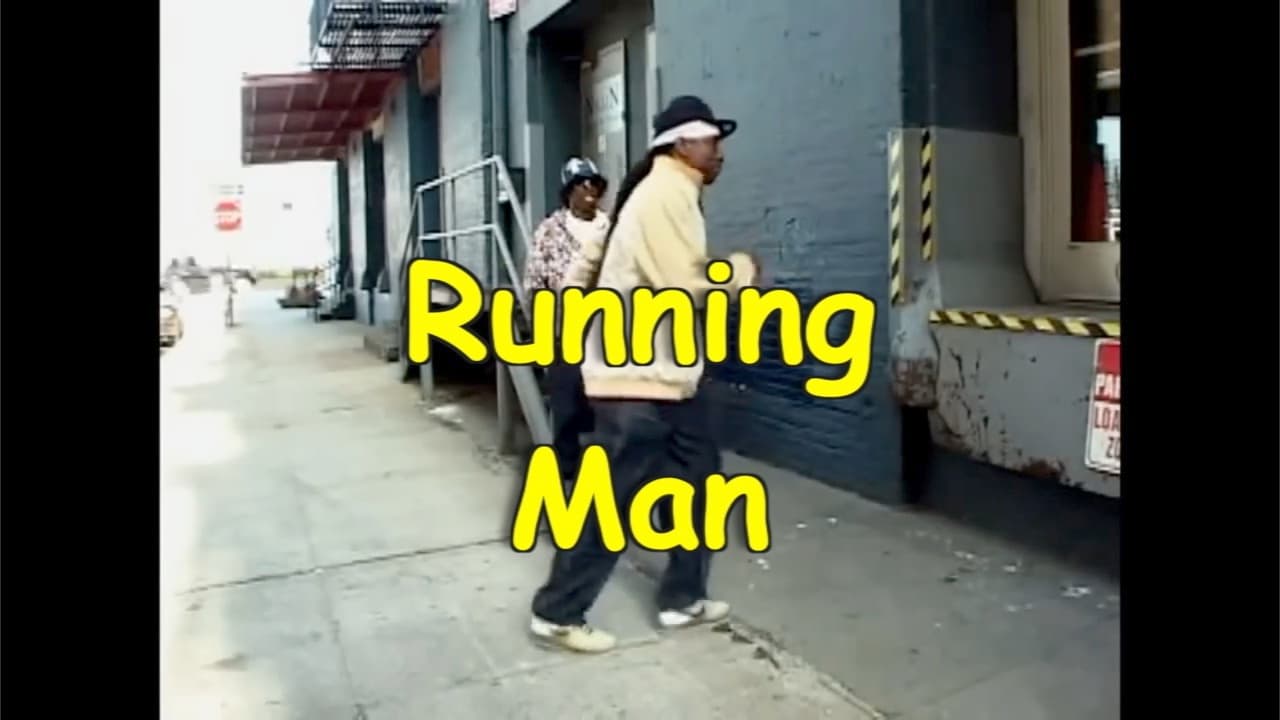
Watch Link and Buddha Stretch demonstrate the Running Man
This original demonstration by Link and Buddha Stretch gives you a reference for the Running Man's rhythm, posture, and character.
Watch how the movement stays connected to the groove instead of becoming a series of isolated knee lifts. The demonstration shows the move in performance; my complete tutorial below breaks down the teaching progression.
My first experience doing the Running Man
I first did the Running Man at a high-school dance in San Jose, California, in 1988. I was excited because it was the only dance move I really knew.
The dance was held in the school gym, and I did the Running Man all night. I moved from one part of the gym to another until I found other people who could do it. Then we challenged one another to see who could keep going the longest. It became an endurance contest.
I also remember watching Bobby Brown do what I recognized as the Running Man in the “Every Little Step” music video. Seeing performers use the step with confidence and musicality gave us a visual reference during an era when people learned many party dances by watching one another, television, and music videos.
Years later, the Running Man became more than the one move I could repeat around a school gym. It became a movement I could analyze, teach, and build into progressive drills for beginners.
How do you do the Running Man dance step by step?
My beginner method starts with a front-and-back jumping drill. This teaches both feet to land together before you add the knee lift.
1. Begin with your feet together
Stand upright with your feet together and your knees relaxed.
Before you add speed, make sure you have enough space and a surface that is not slippery. Keep the movement small while you learn the pattern.
2. Jump one foot forward and one foot back
Instead of opening the feet sideways like a jumping jack, open them front to back.
Land with one foot in front and the other behind you. Both feet should touch the floor at the same time.
This landing is your numbered count:
1
3. Bring both feet back to the middle
Use a small hop to bring the feet together again on the “and.”
Repeat the drill while alternating which foot goes forward:
1 and 2 and 3 and 4 and
At this stage, you are developing the habit of landing both feet simultaneously. Do not rush ahead if one foot keeps arriving before the other.
4. Replace the middle position with a knee lift
Once the front-and-back drill is dependable, change what happens on the “and.”
Instead of bringing both feet together on the floor, bring the back knee up in front of you. One knee is now lifted while the other foot supports you on the ground.
Do not leave the lifted knee pointing down behind your body. Bring it forward where you can see the thigh and knee clearly from the side.
5. Land both feet on the next number
From the knee-up position, place the lifted foot in front as the supporting foot moves back.
Both feet land together on the next numbered count:
- 1: both feet land, one forward and one back
- and: the back knee lifts in front
- 2: both feet land in the switched position
- and: the new back knee lifts in front
The feet exchange jobs continuously. The leg that was behind lifts, then becomes the front foot on the next count.
6. Repeat without changing the count
Continue:
1 and 2 and 3 and 4 and
Keep the pattern small enough that both feet can still land together. A bigger movement is not automatically a better movement.
Learn the feet and rhythm before adding complicated arms. Your arms can move naturally as if you are running, stay relaxed, or take on another groove after the lower-body timing is stable.
How should you count the Running Man?
Count the Running Man as 1 and 2 and 3 and 4 and.
The numbered counts and the “and” counts have different jobs:
| Count | Lower-body action |
|---|---|
| 1, 2, 3, 4 | Both feet land at the same time, one in front and one behind |
| and | One knee lifts in front while the other foot remains on the ground |
This distinction helps you diagnose the movement. If the dancer is supposed to be on 2 but one foot is still in the air, the landing is late. If the knee does not rise until the next number, the transition is late.
For beginning practice, I recommend music around 100 to 110 BPM. That range is fast enough to feel the rhythm but slow enough for many learners to hear the difference between the number and the “and.”
Do not force yourself to use music immediately. First say the count aloud while performing the movement slowly. Increase the tempo gradually. Add music when you can keep the foot changes and knee lifts in the correct places.
If you need to practice hearing and maintaining a steady beat separately, BeatFirst isolates that rhythm skill. It does not replace learning the Running Man technique.
Watch my complete Running Man tutorial
In this lesson, my longtime teaching assistant Margarita and I begin with the front-and-back jumping drill, add the knee lift, and then build several variations.
Do not watch the complete lesson once and try to copy everything at full speed. Pause after each stage. If the foundation is not dependable, the later material is entertainment rather than useful instruction.
Why do beginners lose the Running Man rhythm?
Timing is the most common problem I see with dancers. A timing problem can be caused by balance, flexibility, coordination, or an incomplete understanding of the count.
When a dancer rushes or loses the pattern, I do not search for a clever phrase that allows the mistake to continue at full speed. I turn off the music, slow the movement down, and count with the student.
I also have the student say 1 and 2 and 3 and 4 and aloud. Speaking the rhythm makes it harder to hide where the movement is late or early.
Once the count and movement agree, we gradually speed it up. We return to music only when the student is ready.
Common Running Man mistakes and corrections
| What you notice | Likely issue | What to do |
|---|---|---|
| One foot lands before the other | The front-and-back landing is not established | Return to the jumping drill and make both feet land together |
| The knee remains behind the body | The back leg is bending instead of lifting forward | Bring the knee in front on the “and” |
| The feet are still changing on the number | The transition is late | Slow down and separate the numbered landing from the knee lift |
| The knee lifts on the number | The dancer has reversed the rhythm | Say the count aloud: feet on the number, knee on the “and” |
| The movement becomes uncontrolled at speed | Tempo was added too early | Turn off the music and rebuild slowly |
| The dancer can copy the shape but cannot stay with music | The count is not internalized | Practice aloud without music, then add a steady 100–110 BPM track |
| Later variations feel confusing | The basic alternating pattern is not stable | Stop adding layers and repeat the foundation |
The correction is usually not “try harder.” Make the task simpler until you can perform it accurately.
Is the Running Man safe for beginners?
The Running Man involves repeated hopping. If you have a medical condition, injury, pain, or another concern that makes hopping inappropriate, avoid the movement or ask an appropriate healthcare professional whether it is suitable for you.
Use footwear and a floor with some grip. It is possible to dance on hardwood in socks, but the lack of traction makes slipping more likely. Choose a setup that allows the feet to change position without sliding unexpectedly.
Stop if you feel pain. Fatigue can also change the timing and landing, so take a break when you can no longer control both feet.
What Running Man variations can you learn?
Once the basic rhythm is stable, you can change the repetition, direction, and foot angle without abandoning the count.
Single-single-double
Perform the right lead once, the left lead once, and then repeat one side twice. In my tutorial, I compare the rhythm to a paradiddle:
Right, left, right, right. Left, right, left, left.
Keep the knee lift on the “and” even when one lead repeats.
Side-to-side travel
Shift the whole pattern slightly to one side, then travel back. The landing may angle to help your body change direction.
Do not throw yourself sideways. Travel only as far as you can while keeping the foot landing and count clear.
Turnout, heel pivot, and clap
Land with a small turnout, keep the balls of the feet connected to the floor, and pivot the heels out and back in. Add a clap after the foot action is coordinated.
Repeated side travel
Repeat the same lead several times while traveling. Some shuffle dancers may call related patterns a side step or side walk. I understand these as variations built from the Running Man foundation I learned.
Is the Running Man the same as shuffle dancing?
They overlap, but the names do not always refer to the same dance history or complete vocabulary.
When I learned this movement, it was called the Running Man. Many newer dancers use words such as shuffle or Melbourne Shuffle for related fast footwork, and the Running Man became one of the movements used within modern shuffle practice.
The Melbourne Shuffle developed within Melbourne's underground dance-party scene, as documented by Screen Australia. That later electronic-dance context is not the same as saying that the classic 1980s Running Man originated there.
The footwork can look related because both use weight changes, hops, and running-like steps. Treating every version as identical, however, erases differences in music, community, vocabulary, and style.
Where did the original Running Man dance come from?
The exact invention of the Running Man is not reliably documented, so I do not think the history should be reduced to one confident name or location.
A frequently repeated origin story credits Paula Abdul. A 2012 Essence retrospective described the dance as being “said to be” her brainchild and emphasized Janet Jackson's role in bringing it to a wide audience. That wording is important: it reports an attribution, not conclusive proof of a sole inventor.
What we can say with more confidence is that the Running Man was circulating by the late 1980s and became highly visible through social dancing, performances, and music videos. I was already doing it with other students in a San Jose school gym in 1988. That is my firsthand memory, not a claim that the move began in San Jose.
In 1989, Bobby Brown's “Every Little Step” and Janet Jackson's “Rhythm Nation” gave audiences influential examples of running-style party footwork and choreography. Performers such as MC Hammer added more mainstream visibility around the turn of the decade.
Frequently asked questions about the Running Man dance
What is the original Running Man dance?
The classic Running Man is a late-1980s party dance built from alternating knee lifts and simultaneous front-to-back foot landings. It creates the illusion of running in place. Arm patterns, travel, and repeated-foot variations can be added after the basic rhythm is stable.
Who made the Running Man dance famous?
No single performer owns the complete history. Janet Jackson, Bobby Brown, MC Hammer, and other commercial performers helped the Running Man reach broad audiences during the late 1980s and early 1990s. Its popularity also spread socially through schools, clubs, parties, and dancers teaching one another.
What song goes with the Running Man dance?
There is no single required Running Man song. Use music with a steady beat that allows you to hear 1 and 2 and 3 and 4 and. I recommend starting around 100 to 110 BPM.
The 2016 Running Man Challenge is a separate viral trend commonly performed to Ghost Town DJ's “My Boo.” CBS Sports documented how University of Maryland basketball players helped the challenge spread. That trend should not be confused with the complete history of the classic 1980s dance move.
Why can't I do the Running Man smoothly?
Your timing may be breaking down because the feet do not land together, the knee lift is late, or the tempo is faster than your balance and coordination can manage. Turn off the music, make the movement smaller, count aloud, and rebuild slowly.
How long does it take to learn the Running Man?
There is no reliable timetable. You may understand the basic pattern in one practice session, but performing it continuously and on beat depends on your rhythm, balance, coordination, repetition, and correction. Avoid promises such as “master it in ten minutes.”
What dance move is similar to the Running Man?
Shuffle footwork can include a related Running Man pattern, although its scene and vocabulary are broader. The Roger Rabbit also uses an alternating rhythm and backward leg action, but it is a different move.
What should I learn after the Running Man?
Try the Cabbage Patch for a contrasting upper-body circle and side-to-side groove, or Walk It Out for another footwork pattern that depends on bent knees, pivots, and clear timing.
Build the rhythm before the variations
The Running Man can travel, turn, repeat, and change character. None of those additions will fix an unstable count.
Start with the front-and-back landing. Make both feet arrive together. Add the knee on the “and.” Count aloud. Increase the speed only when your movement agrees with the rhythm.
If you want direct correction instead of trying to diagnose every timing, balance, and coordination problem alone, explore the four-week Running Man Method. The program builds the movement through progressive drills and personalized feedback.
More Hip-Hop articles
Train 1-on-1 with Ceech.
Get personalized coaching tailored to your style and goals.
Book a Free Consult