How to Do the Cabbage Patch Dance: Rhythm, Steps, and 1980s History
TL;DR
- The Cabbage Patch dance is recognized by circular arm movement, a bent-knee bounce, and an upper-body groove that stays connected to the music.
- Start with the beat. Add the arms, upper body, hips, and leg variation one layer at a time.
- Bigger arm circles reflect the way many people performed the move in the 1980s. Buddha Stretch also demonstrates a more compact, leg-active variation.
- Versions differ by region and generation, so learn the essence of the move instead of treating every detail as a fixed rule.
- Creativity comes after rhythm. Without timing, you may be moving, but you are not yet dancing to the music.
The Cabbage Patch dance is a hip-hop party move built around rhythm, circular arm movement, and a grounded groove. It became part of the hip-hop party-dance vocabulary during the 1980s, but the way people perform it can change by region, generation, and personal style.
That variation is part of the lesson. Learn the recognizable foundation first. Once you can keep it on beat, you can make the circles larger, change the legs, adjust the energy, or add your own personality.
What is the Cabbage Patch dance?
The Cabbage Patch dance is a hip-hop party dance in which the arms travel in a horizontal circular path while the bent knees, upper body, and hips move with the beat.
The exact details are not identical everywhere. A dance transcript from Dancers’ Group describes circular arm movement, bent knees, hip motion, and a side-to-side sway. Those elements give you a useful starting point, but they do not make every performance look the same.
Hip-hop party dances are social dances. They are meant to connect people to the music and to one another, not trap everyone inside one exact piece of choreography. That is why learning the essence matters more than copying every small detail from one dancer.
How do you do the Cabbage Patch dance?
To do the Cabbage Patch dance, establish the beat with bent knees, circle the arms in front of your body, and let the upper body, hips, and legs support the rhythm.
1. Find the beat first
Play music with a clear beat and count 1, 2, 3, 4. Bend your knees slightly on the beat without adding the arm pattern yet.
Keep the bounce steady. If the timing changes whenever you think about the next movement, remove the movement and return to the count.
2. Bend your knees
Stand with your feet at a comfortable distance apart. Keep both knees bent so your body feels grounded instead of stiff and upright.
You do not need to squat deeply. Choose a level you can maintain while continuing to move with the music.
3. Make the arm circles
Bring both hands in front of your body. The hands can close loosely while the forearms travel together in a wide horizontal circle, like stirring a large pot.
Allow the shoulders and upper torso to participate. If only the hands move, the dance loses the bigger circular quality many people remember from the 1980s.
4. Add the upper body and hips
Let the torso and hips follow the circle instead of holding the body still behind the arms. Shift from side to side while maintaining the bent-knee bounce.
The upper body does not need to twist as far as possible. It needs to support the rhythm and make the arm pathway look connected to the rest of the body.
5. Add a leg variation
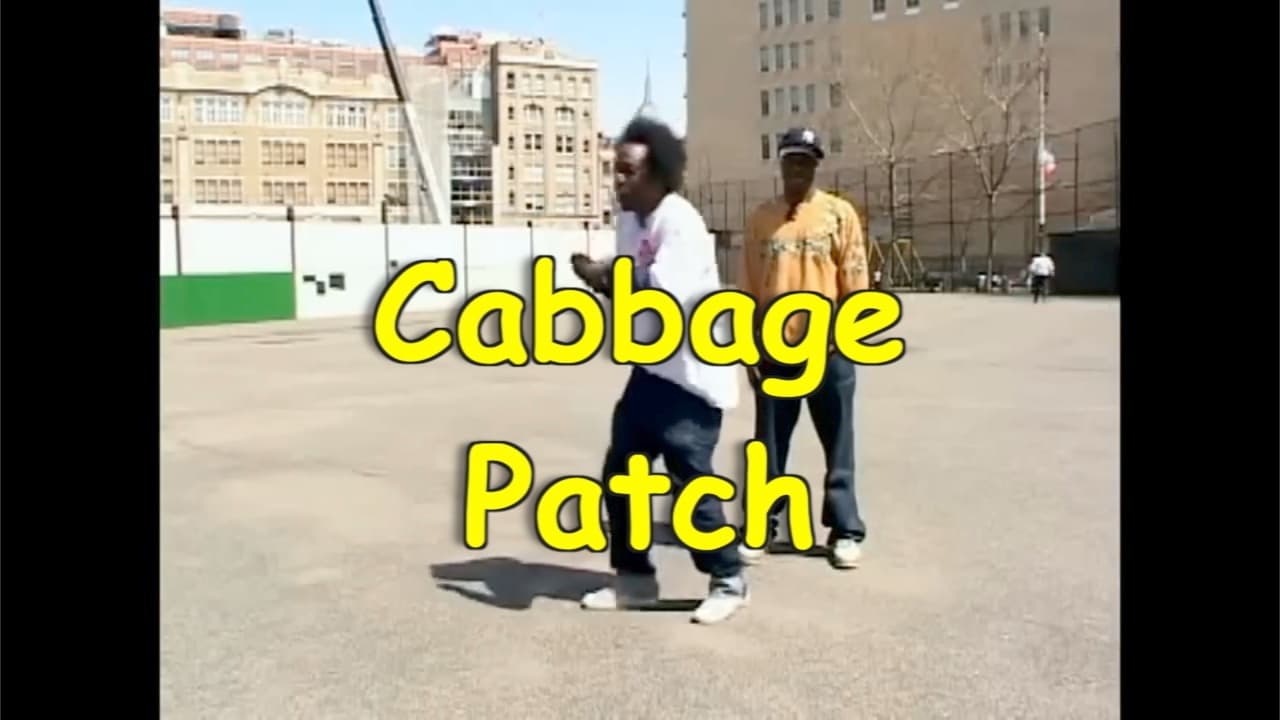
Once the upper-body pattern stays on beat, allow the feet and knees to travel with the groove. You can use a simple side-to-side weight shift or make the legs more active, as Buddha Stretch does in the demonstration below.
Do not let the leg pattern pull you away from the beat. Keep the first version simple enough that your timing remains steady.
6. Add your personality
After the rhythm and basic shape are reliable, experiment with the size of the circles, the direction of the sway, and the amount of leg movement.
This is where the move becomes yours. Creativity works because the foundation remains recognizable underneath it.
What rhythm should you use for the Cabbage Patch dance?
Start by performing one clear action on each main beat: 1, 2, 3, 4. Your knees, arms, and upper body should feel connected to the same steady pulse.
Research on moving to music shows that people vary in their ability to synchronize body movement with a beat, and that a clearer beat can make synchronization easier. In one rhythm study, participants synchronized clapping more accurately than bouncing, which helps explain why isolating rhythm can be useful before adding a full-body dance.
If keeping time is difficult, use the free rhythm trainer. BeatFirst gives beat-by-beat feedback showing whether your taps were early, late, on time, or missed. Practice the pulse first, then bring that timing back into the Cabbage Patch.
Why do Cabbage Patch dance styles look different?
Cabbage Patch styles look different because hip-hop party dances spread through communities, clubs, videos, and face-to-face teaching instead of one standardized syllabus.
The Destiny Arts curriculum places dances such as the Cabbage Patch among the social dances of the late 1980s and early 1990s. It also explains that similar moves could develop under different names in different parts of the country.
I remember people in the 1980s emphasizing the arms much more than the version in the demonstration. The circles were big, and much of the movement came from the upper body. Stretch’s version uses smaller arm movement and more activity in the legs.
That does not mean you should ignore the differences. It means you should identify the shared idea: circular action, a grounded groove, and movement that stays connected to the music.
What does Buddha Stretch’s demonstration show?
Buddha Stretch’s newer demonstration distinguishes the arm-dominant Cabbage Patch from the more leg-driven Reebok and shows why the two moves are sometimes confused.
Stretch is a hip-hop pioneer and a member of Elite Force. His NYU profile describes his role in bridging older and newer forms of hip-hop dance and identifies freestyle hip-hop as drawing from multiple parts of the culture, music, and dance.
The earlier 2014 demonstration previously embedded on this page used smaller arm motions with more leg movement. Viewers from different places may recognize that version as the Reebok, the Cabbage Patch, or a variation that combines related ideas. The newer explanation gives us a better reference without pretending that street-dance vocabulary was identical in every community.
I studied house dance history and technique with Buddha Stretch. I respect the knowledge he brings to the demonstration, but I also want beginners to understand the larger teaching point: one person’s version is a reference, not a reason to erase every regional or personal variation.
When was the Cabbage Patch dance popular?
The Cabbage Patch dance became popular during the 1980s and remained part of the late-1980s and early-1990s hip-hop party-dance vocabulary.
A song called “Cabbage Patch Dance” is cataloged as a 1983 release, while several other artists recorded songs about the move later in the decade. That makes it inaccurate to say that one 1987 recording unquestionably created the dance.
The Versa-Style guide identifies the Cabbage Patch, Running Man, and Roger Rabbit among the famous party dances of the 1980s and 1990s. It also emphasizes rhythm and timing as foundations for executing hip-hop movement.
Why is it called the Cabbage Patch?
The name is commonly connected to the Cabbage Patch Kids craze of the 1980s, although the complete naming history of the dance is not firmly documented.
The dolls became a major cultural reference after their 1983 mass-market debut. The toy museum documents how demand exceeded supply and turned Cabbage Patch Kids into one of the year’s biggest toy stories.
.jpg?width=960)
.jpg)
Some accounts also connect “cabbage” with slang for money. Because the evidence does not establish one uncontested explanation, the honest answer is that the doll connection is widely repeated and culturally plausible, but it should not be presented as proven fact.
Jerry Rice brought the dance into the end zone
As a football fan, I remember watching Jerry Rice perform the Cabbage Patch after scoring a touchdown. That memory stayed with me because it showed how far the dance had traveled beyond clubs and dance circles.
My memory is supported by published reporting. A Rice article describes him performing the Cabbage Patch after scoring against the Chicago Bears in 1987. It also reports that he later stopped doing the celebration after seeing himself on team film.
We do not need an unlicensed photograph to make the point. The documented story and my own memory are enough to show that the Cabbage Patch had become recognizable popular culture.
Common Cabbage Patch mistakes
| What you notice | Likely issue | What to correct |
|---|---|---|
| The movement looks stiff | Your knees are straight | Bend the knees and keep a steady bounce |
| Only your hands are moving | The upper body is disconnected | Let the shoulders and torso follow the circle |
| The arms rush ahead | You are chasing the movement instead of the beat | Return to one clear circle pattern on 1, 2, 3, 4 |
| The legs make you lose time | You added too much footwork too early | Use a simple side-to-side weight shift |
| You are copying every detail | You are treating one version as fixed choreography | Preserve the rhythm and recognizable circular idea |
| Your version has no clear groove | The movement is not synchronized with the music | Remove the styling and rebuild the timing first |
The most common problem is not choosing the “wrong” arm size. It is losing the beat while trying to reproduce too many details at once.
Learn the essence, then make it your own
The most important lesson in party dances is to get the essence of the move and then be creative with it. The minor details can change. The rhythm cannot become optional.
I would teach it in this order:
- Recognize and maintain the beat.
- Keep the knees bent and establish the groove.
- Add the circular arm pathway.
- Connect the shoulders, torso, and hips.
- Add a simple leg pattern.
- Change the size, energy, and style only after the movement stays on beat.
Without rhythm, it is movement. Mastering the dance means making sure the movement belongs to the music. Once that foundation is there, you can stop worrying about every tiny difference and start making creative choices.
If you need help identifying whether rhythm, balance, coordination, or weight transfer is interrupting the movement, private lessons provide individualized correction and practice drills.
Other party dances to practice
The Cabbage Patch belongs to a larger vocabulary of social dances. Practice the Running Man for alternating rhythm and weight transfer, then try the Roger Rabbit for another late-1980s party-dance pattern.
The Steve Martin gives you another way to coordinate the upper and lower body. Learn each move’s foundation first, keep it on beat, and then decide how you want your version to look.
More Hip-Hop articles
Train 1-on-1 with Ceech.
Get personalized coaching tailored to your style and goals.
Book a Free Consult