Stop N Go Dance: How to Do This Locking Move (by Scoo B Doo)
Introduction
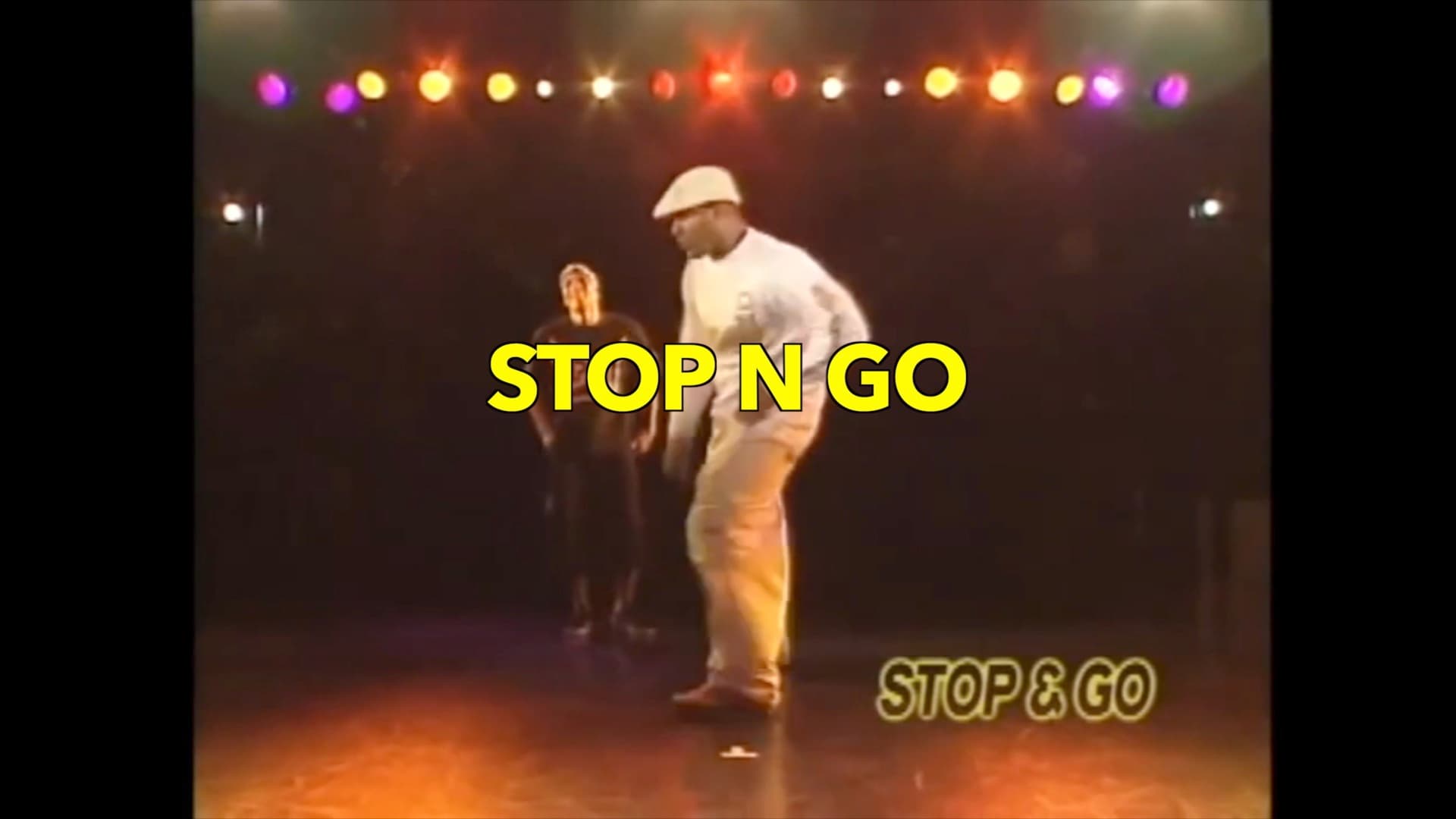
The "Stop N' Go" is a classic locking dance move built on contrast. Originating from locking pioneer Scoo B Doo, it asks you to freeze in place, then transition smoothly back into motion. That contrast gives the move its playful character and makes it useful for adding personality to your locking.
Video Demonstration
Dance History
Locking, a funk dance style that emerged in the late 1960s, was pioneered by Don Campbell, who accidentally created the "locking" concept while struggling to remember the steps of the "Funky Chicken" dance. One of Campbell's proteges, Jimmy "Scoo B Doo" Foster, is credited with inventing the "Stop N' Go" move, which quickly became a staple in the locking dance vocabulary.
Step By Step Instruction
- Start by standing with your feet shoulder-width apart and your knees slightly bent.
- Step out to the side with one foot, shifting your weight onto that leg.
- Freeze in place, locking your body and holding the position for a beat or two.
- Smoothly transition back into motion by stepping with the other foot, continuing the movement in the opposite direction.
- Repeat the process, alternating between freezing and moving, and incorporating arm movements and body isolations for added flair.
Tips For Learning
- Practice the freeze and transition slowly at first, ensuring a clean and sharp lock.
- Experiment with different arm positions and body angles to add variety.
- Incorporate hip movements and footwork variations to enhance the funk factor.
- Sync the freezes and transitions with the music's rhythm and accents.
- Study videos of locking pioneers like Scoo B Doo and Don Campbell to capture the authentic style.
Conclusion
The "Stop N' Go" is a true embodiment of the locking dance style, showcasing the contrast between stillness and motion that defines this funk-fueled art form. By mastering this move, dancers can tap into the raw energy and playful spirit that has made locking a beloved dance genre for decades. Whether performed solo or incorporated into intricate routines, the "Stop N' Go" is a surefire way to elevate your locking game and command the dance floor with unparalleled swagger.
Frequently Asked Questions
What is the Stop N Go locking dance?
The Stop N Go is a locking dance move built on the contrast between sudden freezes and smooth transitions back into motion. The dancer steps, freezes in a locked pose for a beat, then releases and steps again in the opposite direction. The sharp tension between stillness and flow is what gives locking its signature character.
Who created the Stop N Go move?
The Stop N Go was created by Jimmy "Scoo B Doo" Foster, an original member of The Lockers and a pioneering protégé of locking founder Don Campbell. Foster developed the move in the 1970s and it became one of the most widely used locking techniques because it captures the dance style's defining tension between motion and stillness.
Is the Stop N Go the same as the Lock?
Closely related. The Lock is the foundational freeze position that defines locking dance , a sudden pause after motion. The Stop N Go is a specific traveling move that USES the Lock (the freeze) as its defining beat. Every time you freeze during a Stop N Go, you're performing a Lock. The two moves train the same fundamental skill.
How long does it take to learn the Stop N Go?
Most beginners can perform the step-freeze-step pattern in 20-30 minutes. Getting the SHARPNESS right on the freeze , a truly locked, tension-filled pose rather than a soft pause , takes 1-2 weeks of focused practice. Matching the freezes to the music's accent beats is the next layer, another week or two.
What's the most common Stop N Go mistake?
Soft freezes. The Stop N Go lives and dies on how sharp the freeze is , it should feel like every muscle locks simultaneously, not like a gradual deceleration. Beginners let the freeze fade instead of hitting it hard. Practice the freeze alone first (without the step) until it feels like hitting a wall, then add the stepping.
More Locking Dance Moves
If you liked the Stop N Go, these moves share the same freeze-and-flow contrast at the core of locking:
- Mastering the Iconic Lock: The Foundation of Locking Dance , The Stop N Go is built on the same freeze-then-release mechanic that defines the Lock itself, so mastering the original Lock directly sharpens the stillness moments in your Stop N Go.
- Mastering the Sneak: A Classic Locking Move , Both the Sneak and the Stop N Go are freeze-based moves that use a sharp hold to punctuate motion, and both were staples of early Don Campbell-era locking vocabulary.
- Mastering the Pacing Move in Locking Dance , Pacing builds the rhythmic arm extension that gives you something purposeful to do with your upper body during the "go" phase of the Stop N Go.
- Mastering the Volkswagen: A Funky Locking Move , Like the Stop N Go, the Volkswagen relies on holding a precise shape at a defined beat before releasing, training the same sense of rhythmic pause and body control.
More Locking articles
Train 1-on-1 with Ceech.
Get personalized coaching tailored to your style and goals.
Book a Free Consult