Thomas Flare Breakdance: How to Do This B-Boy Power Move
Introduction
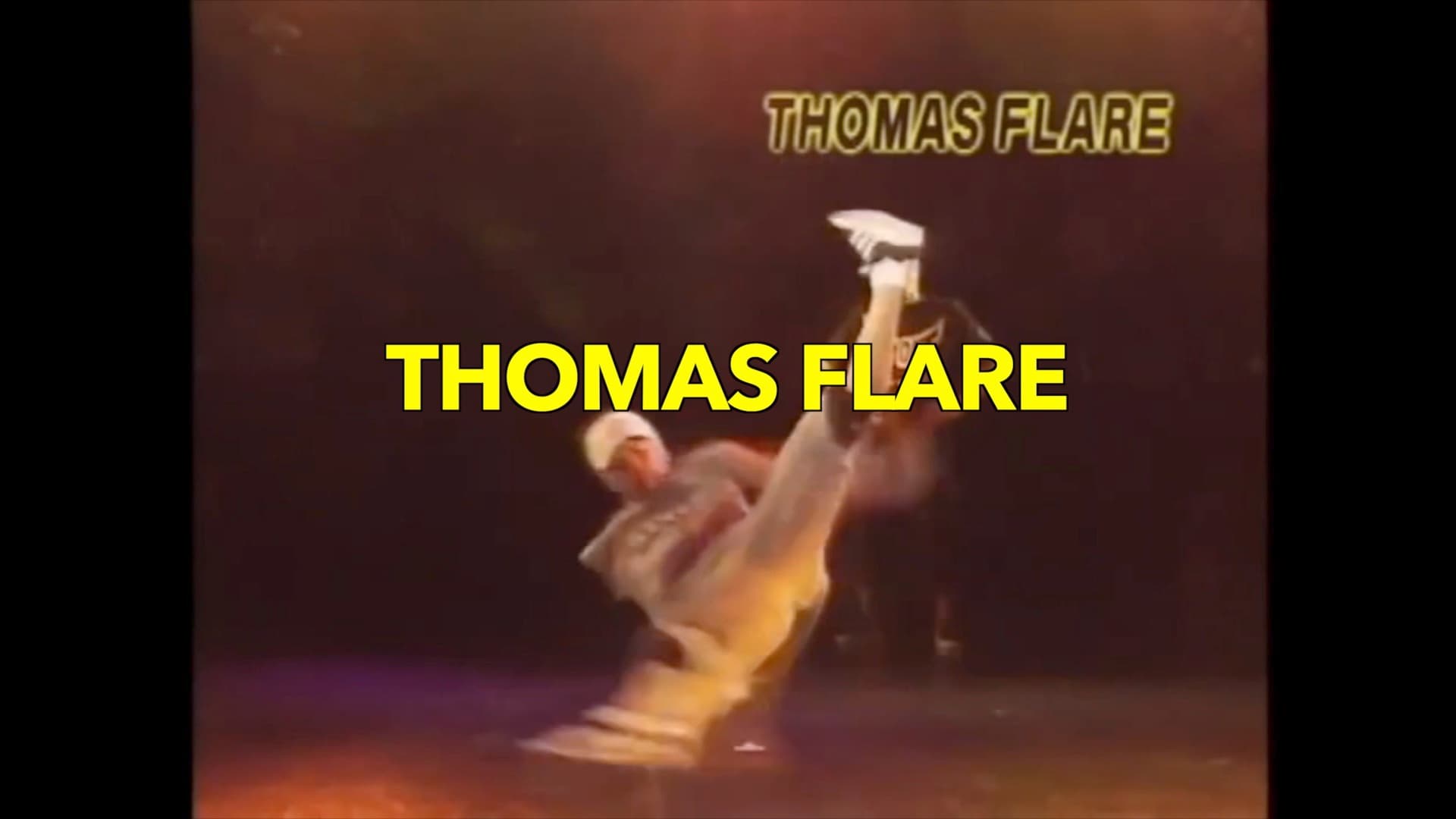
The Thomas Flare, commonly known as simply "flare" in breaking, is a dynamic and impressive power move that has become a fundamental element of b-boying and b-girling. This acrobatic move involves alternating balance between both arms while swinging the legs in continuous circles, creating a mesmerizing visual effect. The flare requires a combination of strength, flexibility, and precise technique, making it a challenging yet rewarding move to master. As a staple in breaking battles and performances, the flare serves as both a standalone move and a versatile transition between other power moves, adding flair and momentum to a breaker's routine.
Video Demonstration
Dance History
The flare originated in gymnastics and was popularized in breaking culture. It was created by Kurt Thomas, an American gymnast, in the 1970s. Initially performed on the pommel horse in gymnastics, the move was adapted by breakers who brought it to the dance floor. In gymnastics, it is often referred to as the "Thomas flair" in honor of its creator. The flare quickly became an essential part of breaking vocabulary, showcasing the fusion of athletic prowess and dance creativity that defines the art form.
Step By Step Instruction
- Start in a lunge position with your left leg back and left hand on the ground (for counterclockwise rotation).
- Kick your left foot behind your right leg, then swing your right leg up towards your ear.
- Lean slightly to the left, keeping your weight over your left hand.
- Slide your left foot along the ground to the front, aiming for a straddle V-sit position.
- Shift your weight to your right hand, placing it near your right hip.
- Kick your left leg high towards your left ear while swooping your right leg low and close to the ground.
- Transfer your weight back to your left hand through a straddle planche or press position.
- Repeat the motion, kicking your right leg high and swooping your left leg low to continue the circular movement.
Tips For Learning
- Develop flexibility in the straddle and shoulder extension positions.
- Build strength in L-sit, V-sit, and planche positions.
- Practice on a soft, low-friction surface like carpet or martial arts mats.
- Focus on keeping your arms pushed down and fully extended.
- Always kick with opposite legs while holding down with opposite arms.
- Maintain hip height by kicking the legs forcefully.
- Start with sliding your feet on the ground and progress to keeping them airborne.
Conclusion
The Thomas Flare is a cornerstone move in breaking that demands dedication and practice to master. By understanding its origins in gymnastics and its adaptation to breaking, dancers can appreciate the rich history behind this dynamic power move. With consistent practice and attention to technique, breakers can develop smooth, high-flying flares that will elevate their performances and battles. Remember, the key to successful flares lies in the combination of leg power, arm strength, and precise weight shifts, all working together to create a fluid, circular motion.
Frequently Asked Questions
What is the Thomas Flare?
The Thomas Flare (usually just called "flare" in breaking) is a power move where the dancer alternates balance between both arms while swinging their legs in continuous wide circles. It originated in gymnastics on the pommel horse and was adapted to breakdancing in the late 1970s, becoming one of breaking's most recognizable power moves.
Who created the Thomas Flare?
The Thomas Flare was created by American gymnast Kurt Thomas in the 1970s on the pommel horse. B-boys adapted the move to the dance floor by performing it without a pommel horse, balancing on their hands and the floor instead. In gymnastics it's technically the "Thomas flair" , the breaking spelling "flare" is the one that stuck in dance circles.
Is the Thomas Flare hard to learn?
Very hard. The Thomas Flare is one of the most physically demanding moves in breaking , it requires significant shoulder and arm strength, hip flexibility, core control, and coordination. Most breakers need 6-12 months of dedicated training with solid prerequisites (swipes, push-ups, straddle flexibility) before they can execute a clean flare.
How long does it take to learn the Thomas Flare?
Assuming you have the prerequisite strength and flexibility: 3-6 months of dedicated practice to get a rough flare, 6-12 months for a clean one, 1-2 years to combine flares into sequences smoothly. Without prerequisites (shoulder strength, straddle flexibility, core stability), expect significantly longer , start with conditioning first.
What's the most common Thomas Flare mistake?
Not keeping the arms fully extended. The flare requires locked-out, fully extended arms to transfer weight between them cleanly. Bent arms collapse, causing the hips to drop and the rotation to die. Drill planche-position arm strength BEFORE attempting full flares , push-ups with locked arms, L-sits, and straddle holds build the required structure.
More Breaking Dance Moves
If you liked the Thomas Flare, these moves share the same requirement for extended arm strength, hip elevation, and continuous circular leg motion:
- Mastering the Swipe: A Fundamental Breaking Power Move , The Swipe develops the same hip-up, weight-on-extended-arms body position that the flare requires, and many b-boys use swipe training as direct conditioning for flares.
- Mastering the Windmill: The Iconic B-Boy Power Move , The windmill shares the flare's continuous circular leg motion, and both moves are paired in advanced power move combos because they demand the same leg power and body awareness.
- Mastering the 1990: A Classic Power Move in Breaking , Like the flare, the 1990 has deep roots in gymnastics movement patterns and demands the same full arm extension and sustained inverted balance to execute cleanly.
- Mastering the Baby Swipe: A Fundamental Breaking Power Move , The Baby Swipe is the most accessible way to start building the bridged body position and rotational habit the flare depends on, making it a common prerequisite drill.
More Breaking articles
Train 1-on-1 with Ceech.
Get personalized coaching tailored to your style and goals.
Book a Free Consult